Block diagram of a battery‑free sensor showing antenna/coil to rectifier & cold‑start, energy storage and regulator feeding a sensor/MCU, and wireless communication output.

Inside a Battery‑Free Sensor: Power Path, Storage, and Duty Cycling

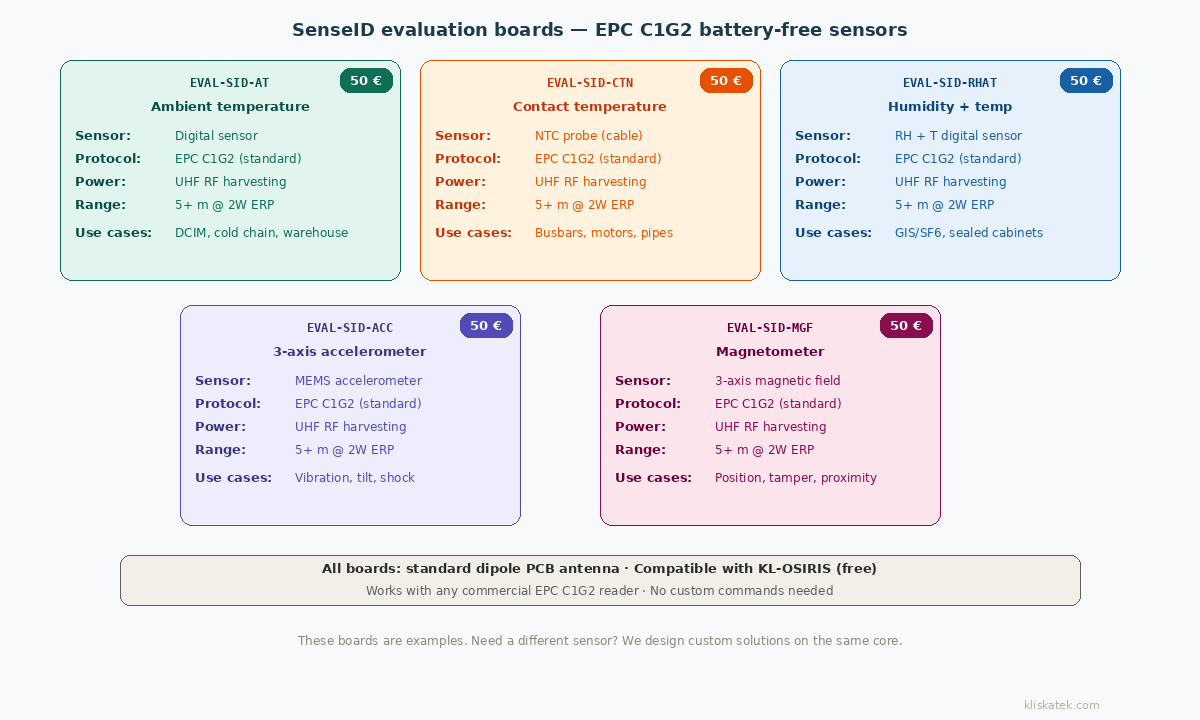
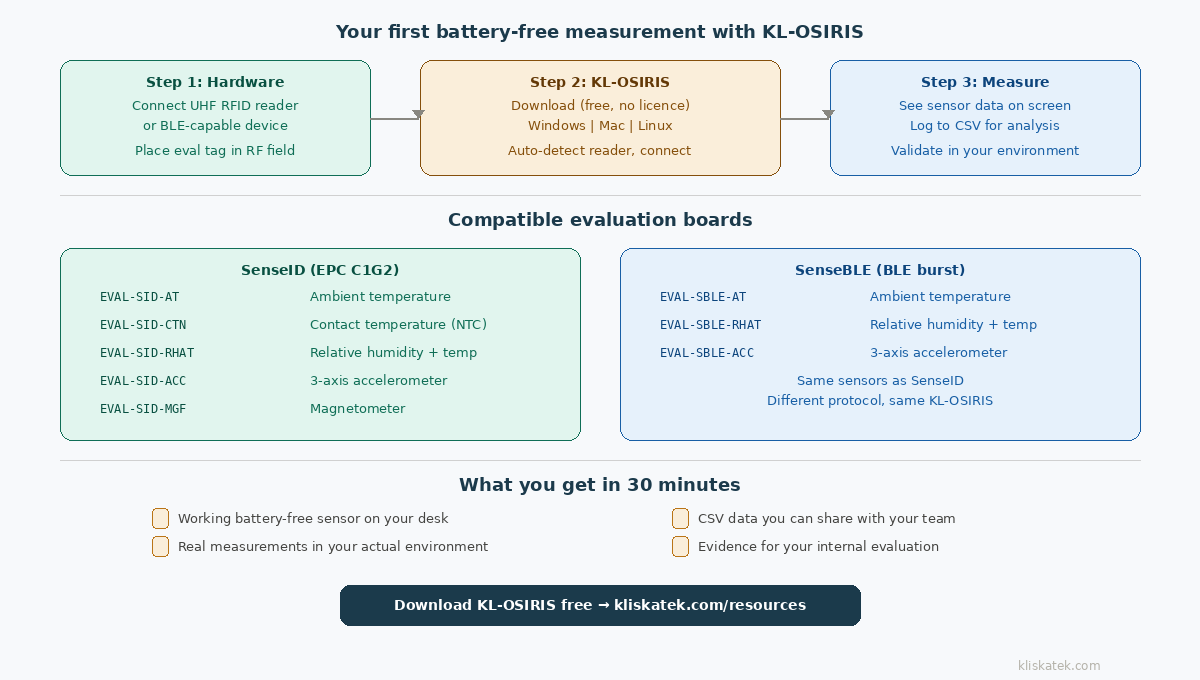
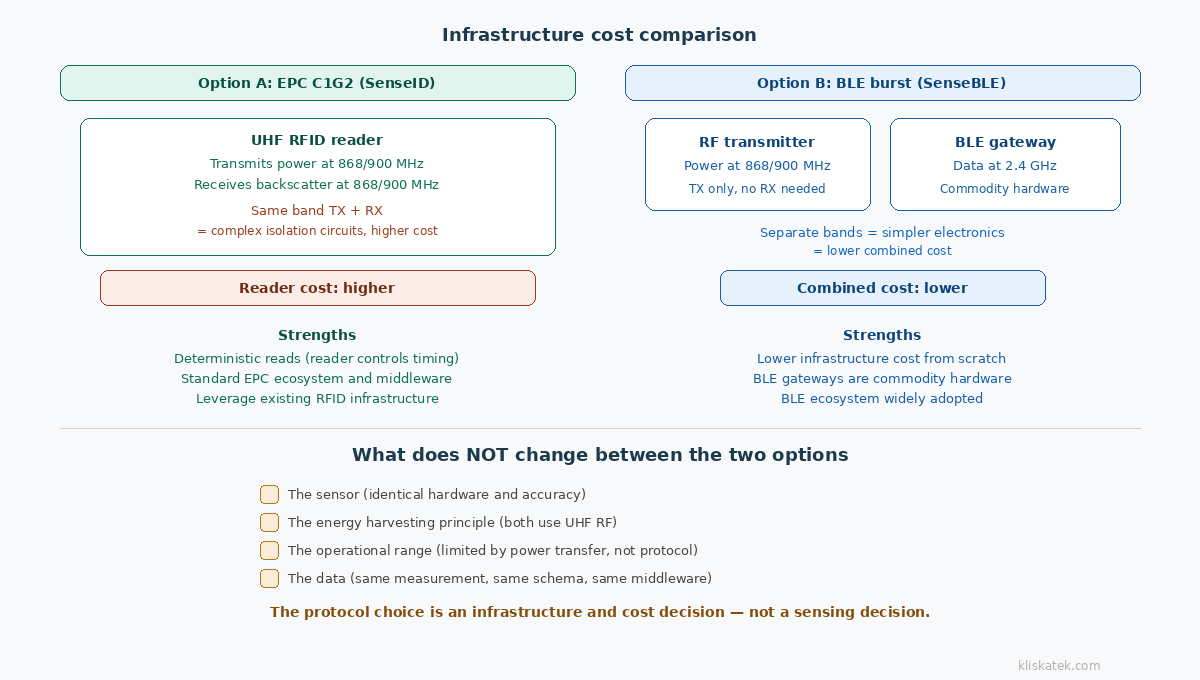
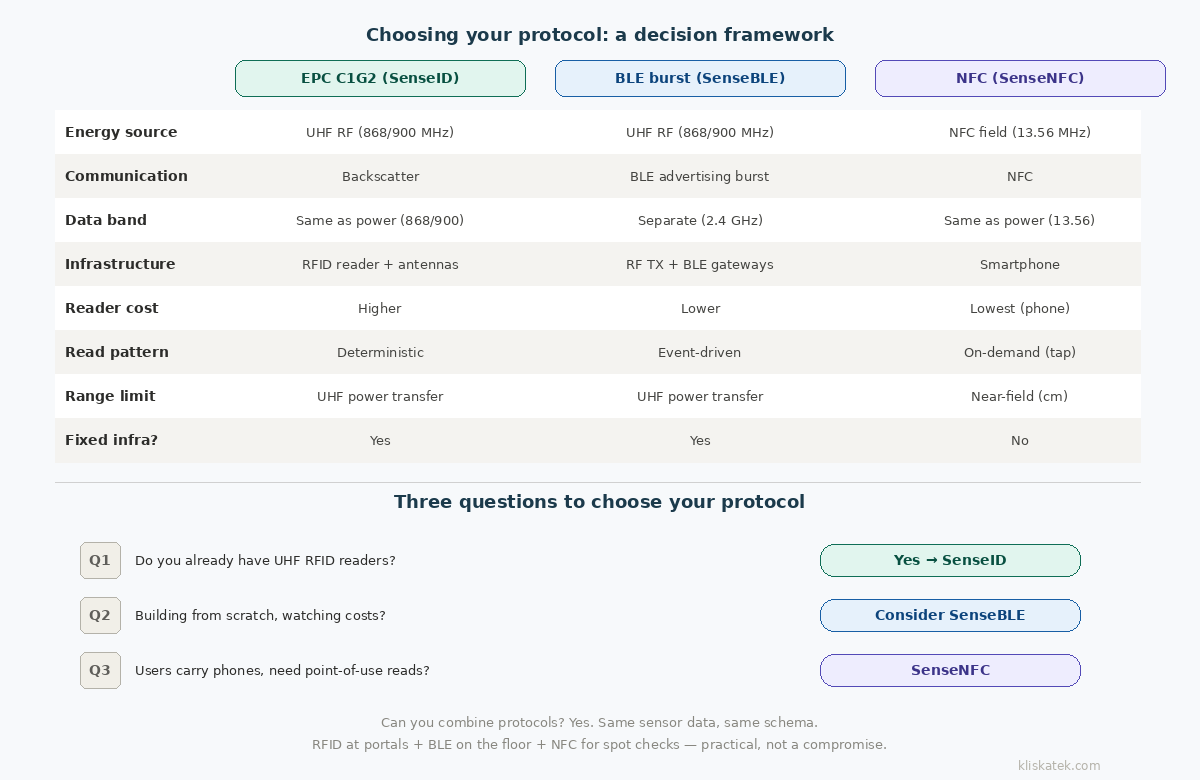
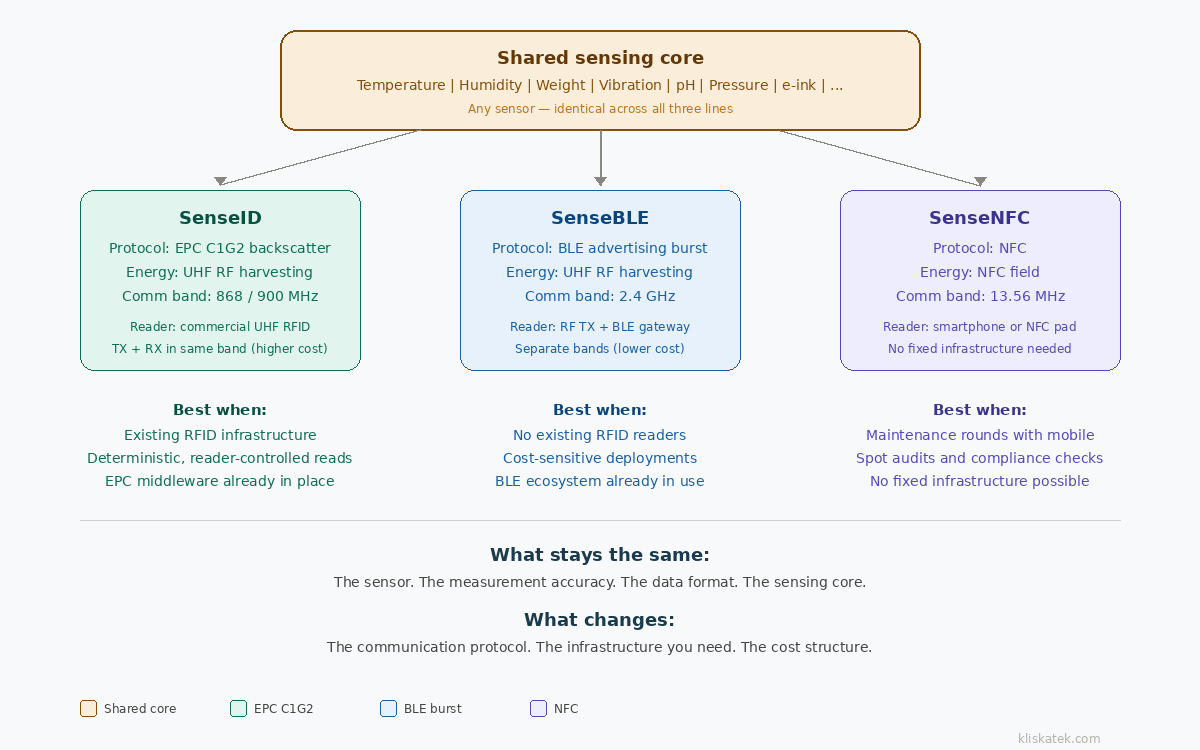
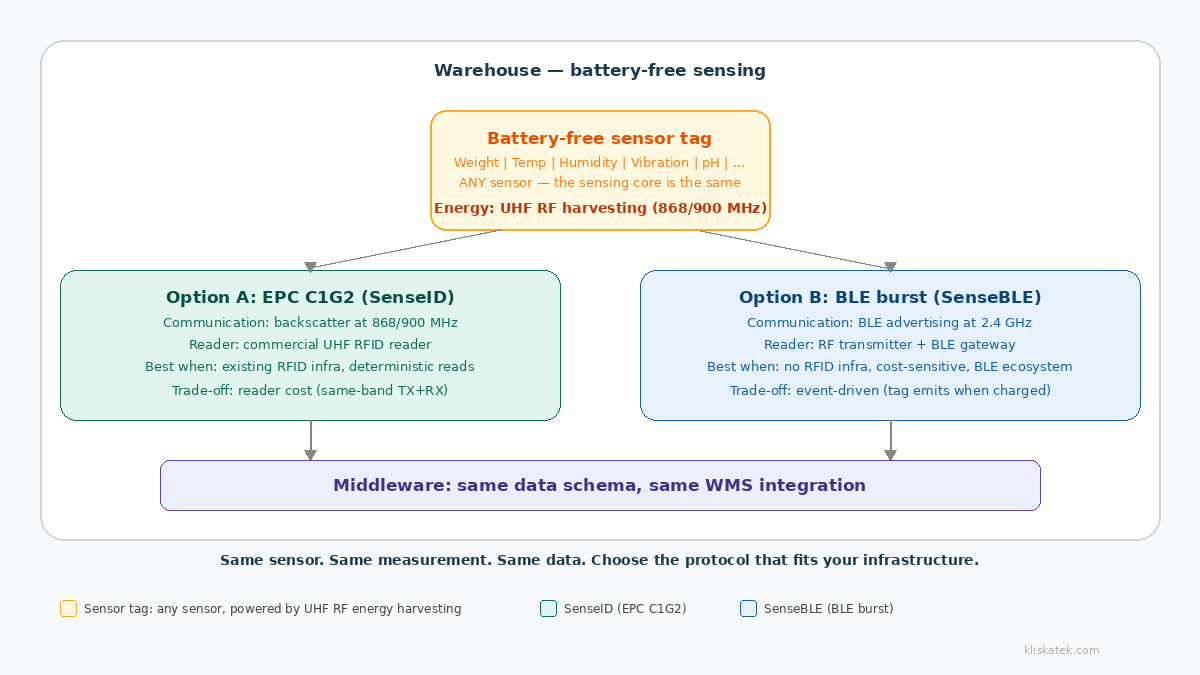
Battery‑free sensor design: power path, storage sizing, and duty‑cycling—plus UHF RFID, BLE burst, and NFC tap‑to‑measure patterns that actually work.

The Rise of Zero‑Maintenance Sensors: A Game Changer for Industry

Zero‑maintenance sensing is transforming industrial IoT—but it isn’t a single technology. It’s a strategy built around choosing the right architecture for the environment: battery‑free when a reader can reach the sensor, battery‑powered when autonomous updates are needed, and wired when continuous real‑time data is essential. With battery‑free sensing now scaling rapidly—from USD 73.2M in 2025 to a projected USD 512.8M by 2035—industries are adopting long‑life, low‑touch monitoring across data centers, logistics, and civil infrastructure. The real shift isn’t eliminating batteries everywhere; it’s eliminating unnecessary maintenance while keeping sensing reliable, sustainable, and scalable.