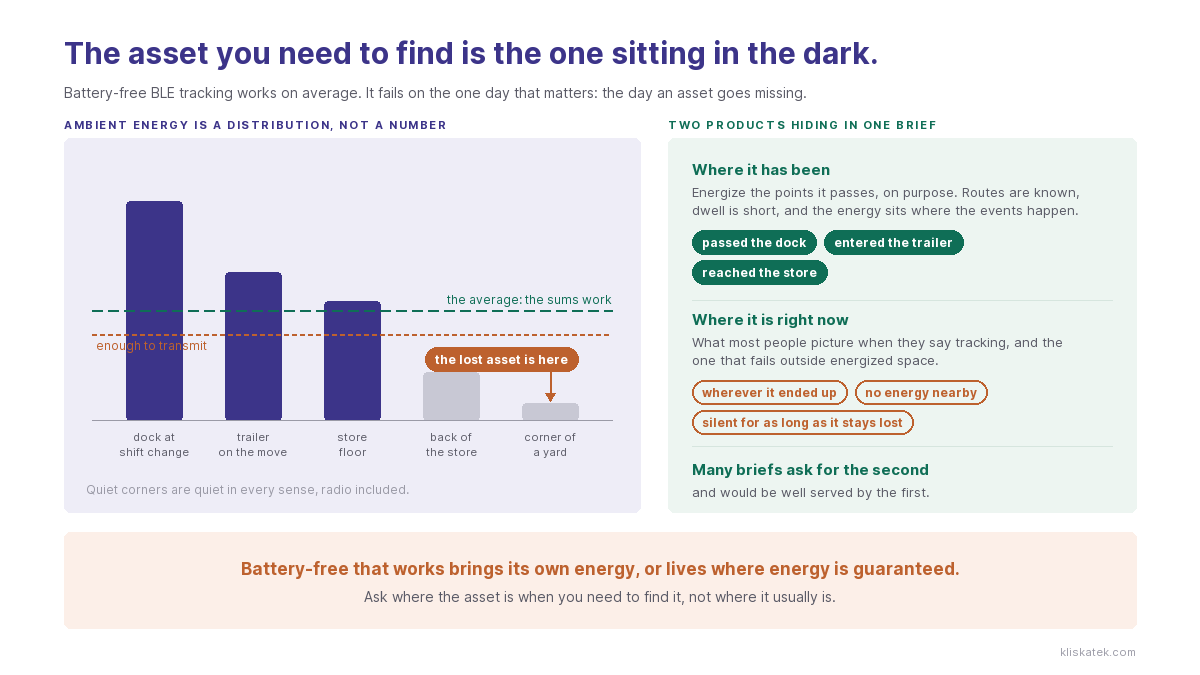
Battery-free BLE tracking works on average and fails on the day an asset goes missing. Why ambient energy is not a plan, and what to ask before you build.

 Mikel Choperena
Battery-free BLE tracking works on average and fails on the day an asset goes missing. Why ambient energy is not a plan, and what to ask before you build.
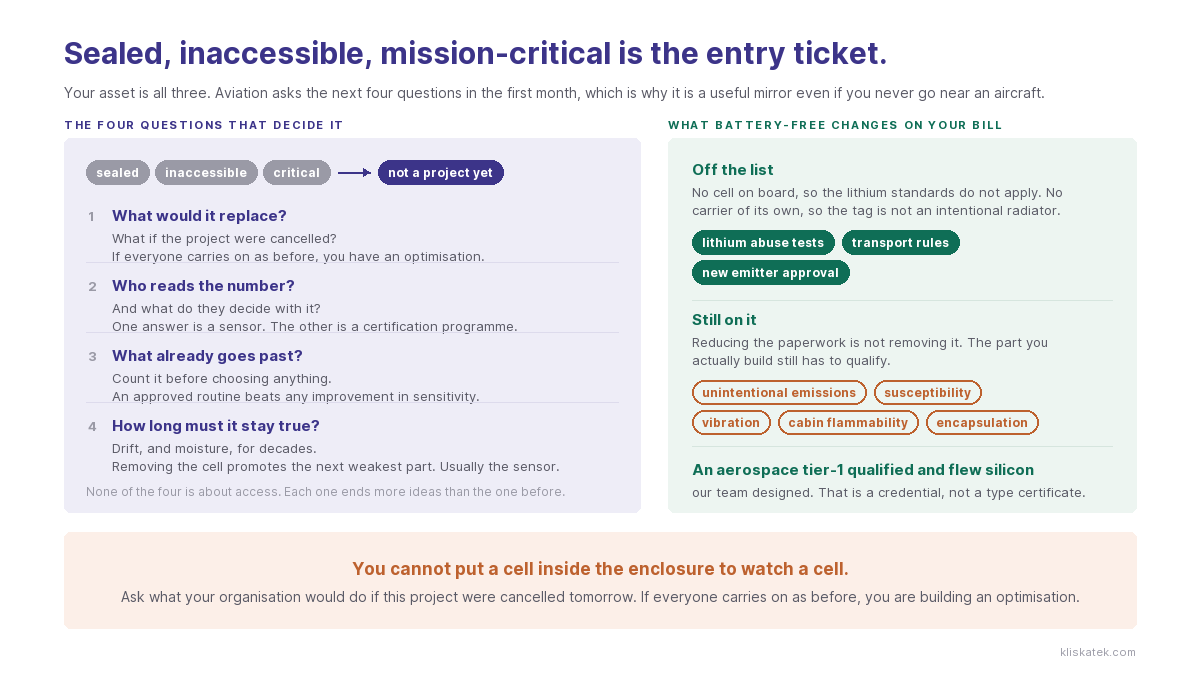
Your asset is sealed, inaccessible and mission-critical. Four questions decide aerospace battery-free sensors, and none of them is about access.

CMMS integration is where battery-free sensor projects are decided. What a reading needs to carry before it can open, prioritise and close a work order.
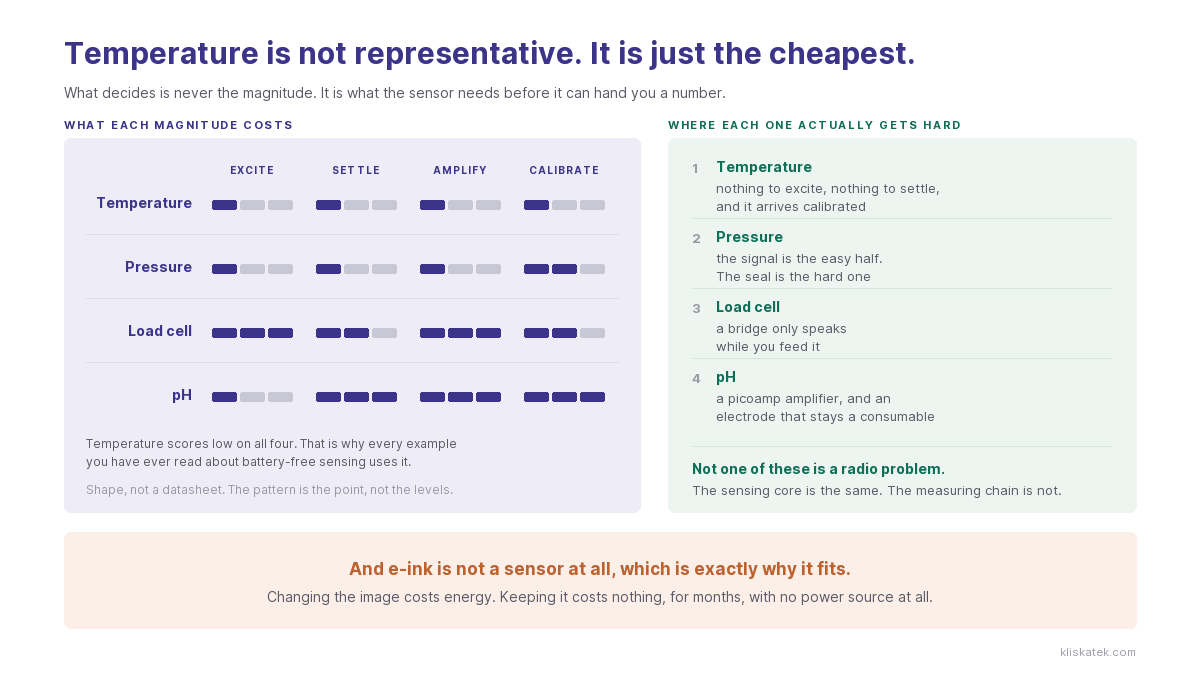
Custom battery-free sensors go past temperature: pressure, load cells, pH and e-ink, what each one really costs, and where the honest limit is.
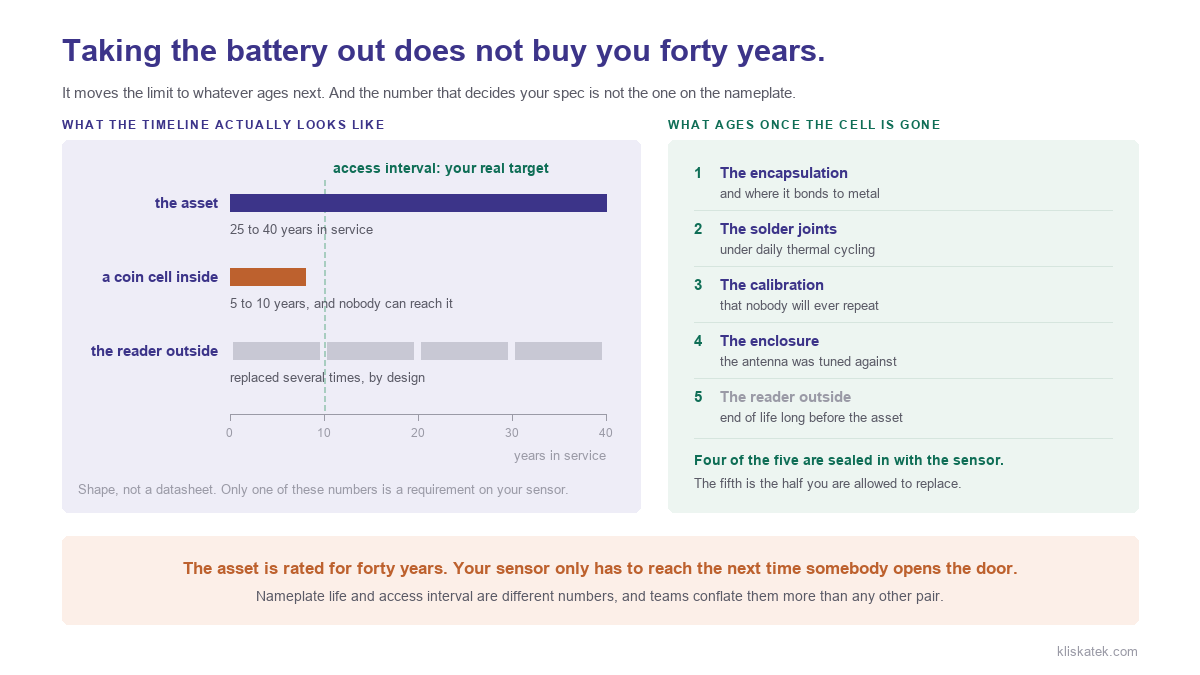
Battery-free sensor lifetime is not battery life with the cell removed. What really ages in a sealed HV asset, and why the access interval sets the spec.
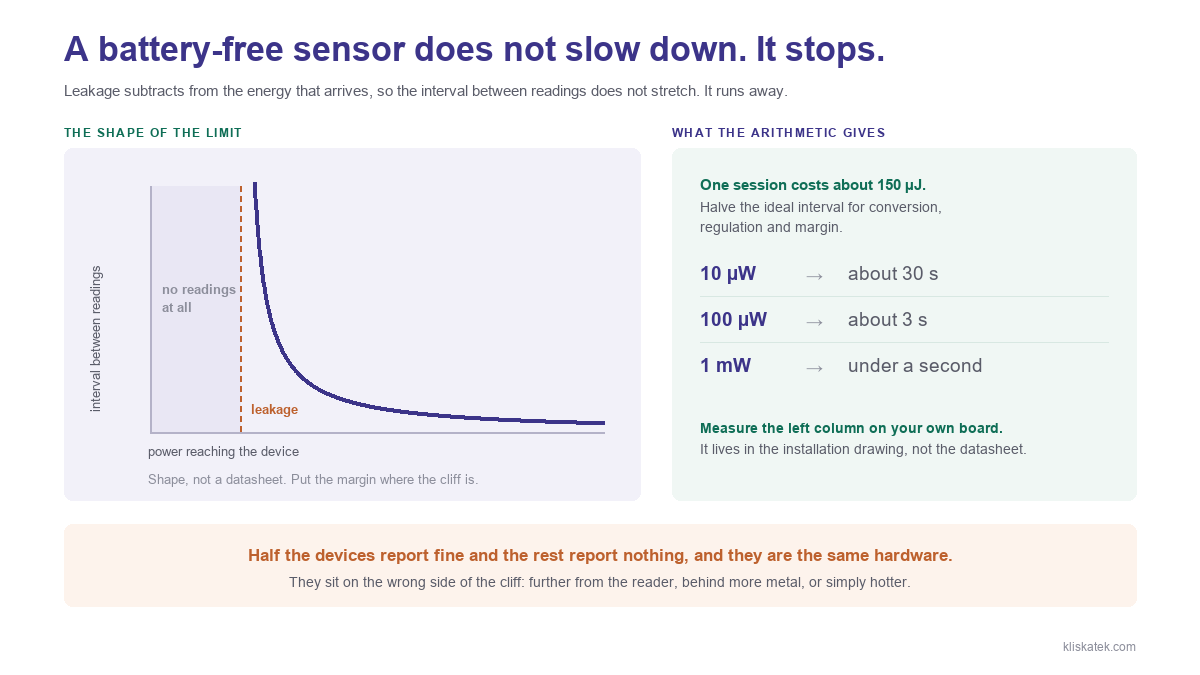
A battery-free sensor sampling rate is arithmetic, not a setting. The three inputs, the leakage cliff, and four levers when the spec asks for more.
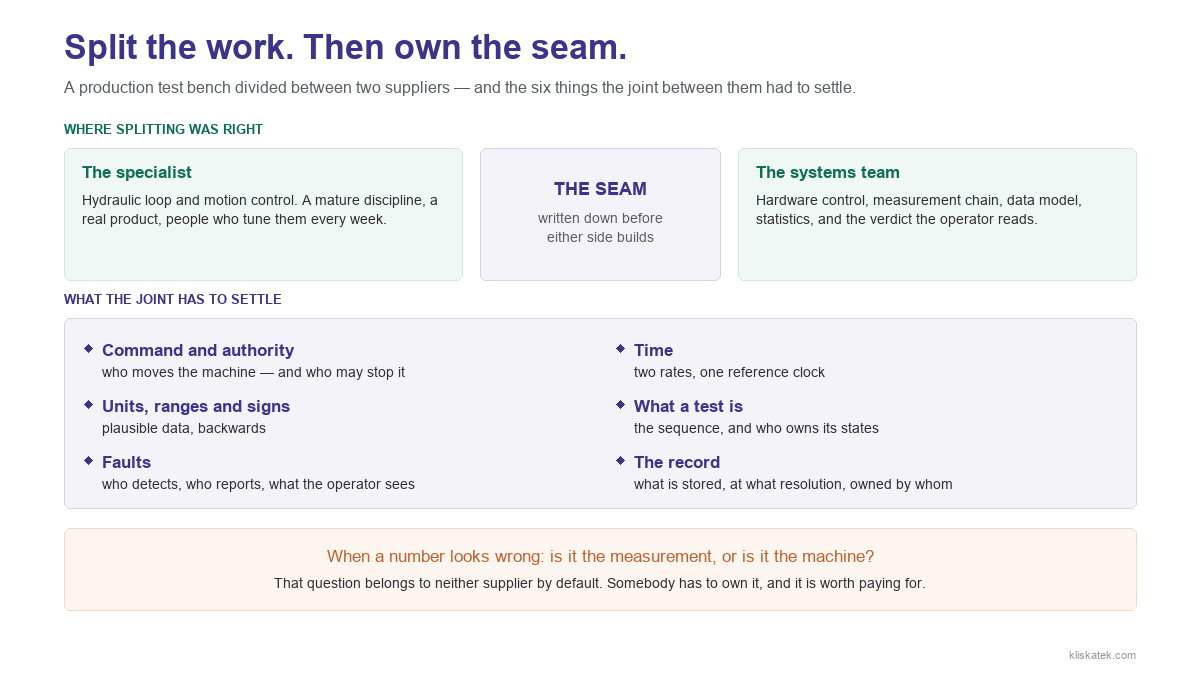
A cross-domain engineering case study: why we split a production test bench between two suppliers, and why the seam decided the whole project.
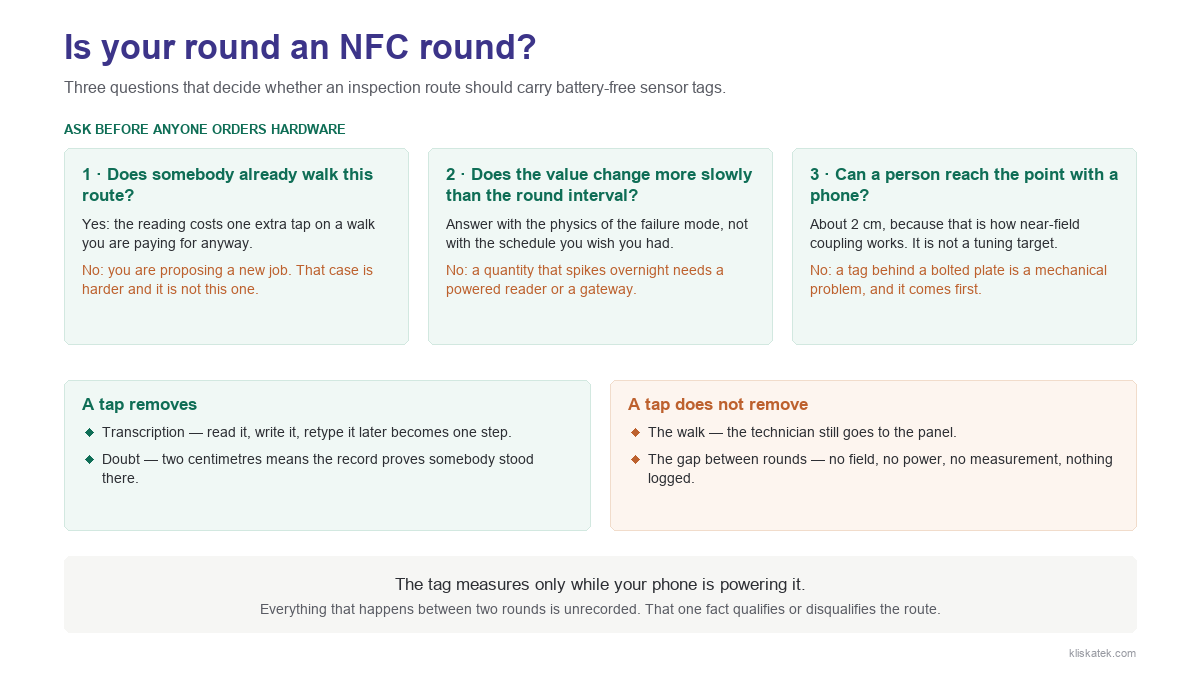
NFC maintenance rounds do not replace the walk, they change what it produces. Three questions decide whether your inspection route is a candidate
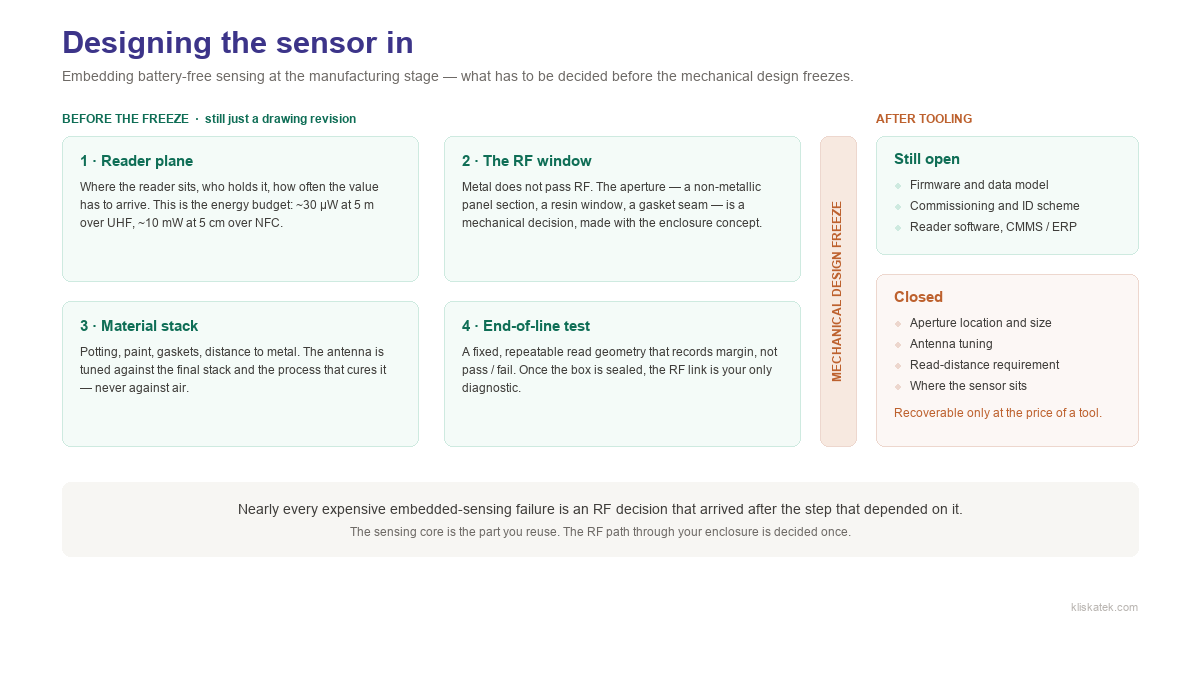
Designing a battery-free sensor into your product? The RF, enclosure and end-of-line test decisions OEMs must lock in before the mechanical design freezes.
Do you have a specific question or need more information about our products, services, or expertise? We're just an email or phone call away. Feel free to reach out, and we'll ensure your queries are addressed promptly.
If you prefer a face-to-face conversation, our physical location is open and welcoming to visitors. Come meet us in person, and let's discuss how we can work together to drive innovation and excellence.
Polígono Akarregi 10
Oficina 112
20120, Hernani
Interested in a career with Kliskatek? We're always on the lookout for exceptional talent. You may be a perfect fit to join our dynamic team.
Kliskatek is a cross-domain engineering boutique. We solve problems that require hardware, firmware, software and wireless/RF to work together as a system. With 17 years of experience in RF-powered sensing, we help clients own the integrated result.
© Copyright 2023-2026 Kliskatek S.L. All rights reserved.