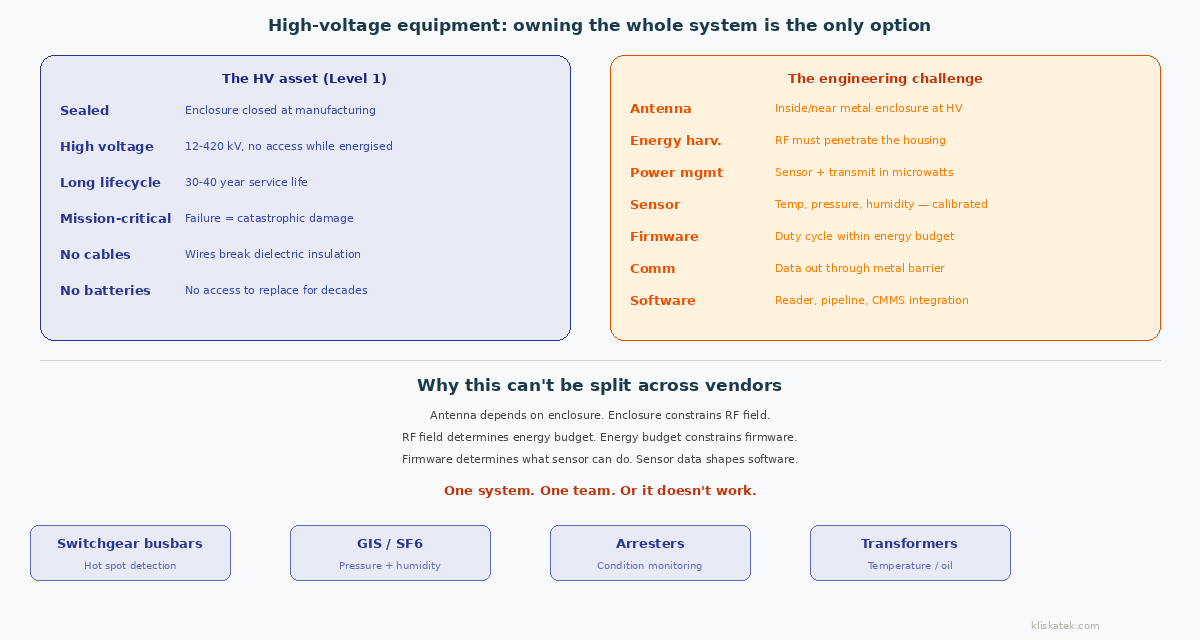
High-voltage switchgear, GIS and transformers are sealed, inaccessible, and mission-critical. Monitoring them requires battery-free sensing — and battery-free sensing requires a team that owns the entire HW/FW/SW/RF stack. Here’s why.

High-voltage switchgear, GIS and transformers are sealed, inaccessible, and mission-critical. Monitoring them requires battery-free sensing — and battery-free sensing requires a team that owns the entire HW/FW/SW/RF stack. Here’s why.
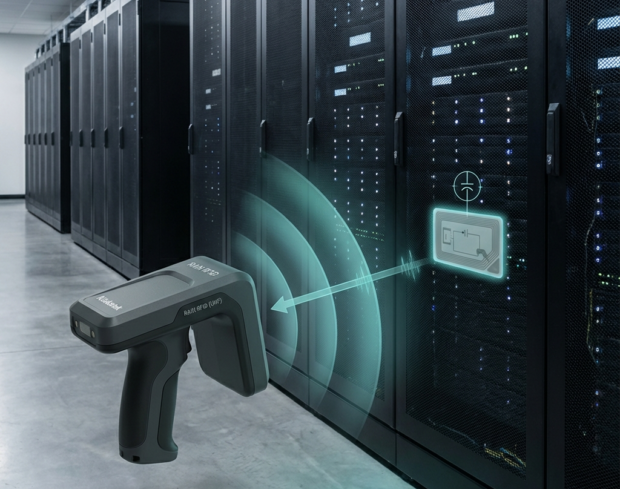
“Battery‑free” doesn’t mean “no energy.” It means sensors harvest energy on demand (often from sub‑1 GHz RF) and buffer it (e.g., in capacitors/supercapacitors) to take a measurement and backscatter the data. That subtle difference is what makes deployments practical, compliant, and maintenance‑free.
Do you have a specific question or need more information about our products, services, or expertise? We're just an email or phone call away. Feel free to reach out, and we'll ensure your queries are addressed promptly.
If you prefer a face-to-face conversation, our physical location is open and welcoming to visitors. Come meet us in person, and let's discuss how we can work together to drive innovation and excellence.
Polígono Akarregi 10
Oficina 112
20120, Hernani
Interested in a career with Kliskatek? We're always on the lookout for exceptional talent. You may be a perfect fit to join our dynamic team.
Kliskatek is a cross-domain engineering boutique. We solve problems that require hardware, firmware, software and wireless/RF to work together as a system. With 17 years of experience in RF-powered sensing, we help clients own the integrated result.
© Copyright 2023-2026 Kliskatek S.L. All rights reserved.