
Insights · Building a product · 16 November 2026
Inherited Development: Can You Build It Again?
An inherited development usually arrives with a prototype that works. It sits on the desk, it powers up, and somebody demonstrates it. That is the least informative thing in the box. A working prototype proves the design worked once, in that unit. It does not prove you can make it again, and making it again is the whole job.
We wrote about the handover between a prototype team and a production team, where the risk is the decisions that never get written down. This post is about the harder version. The first team is gone, or busy, or was another company, and you have to decide whether to finish what they started.
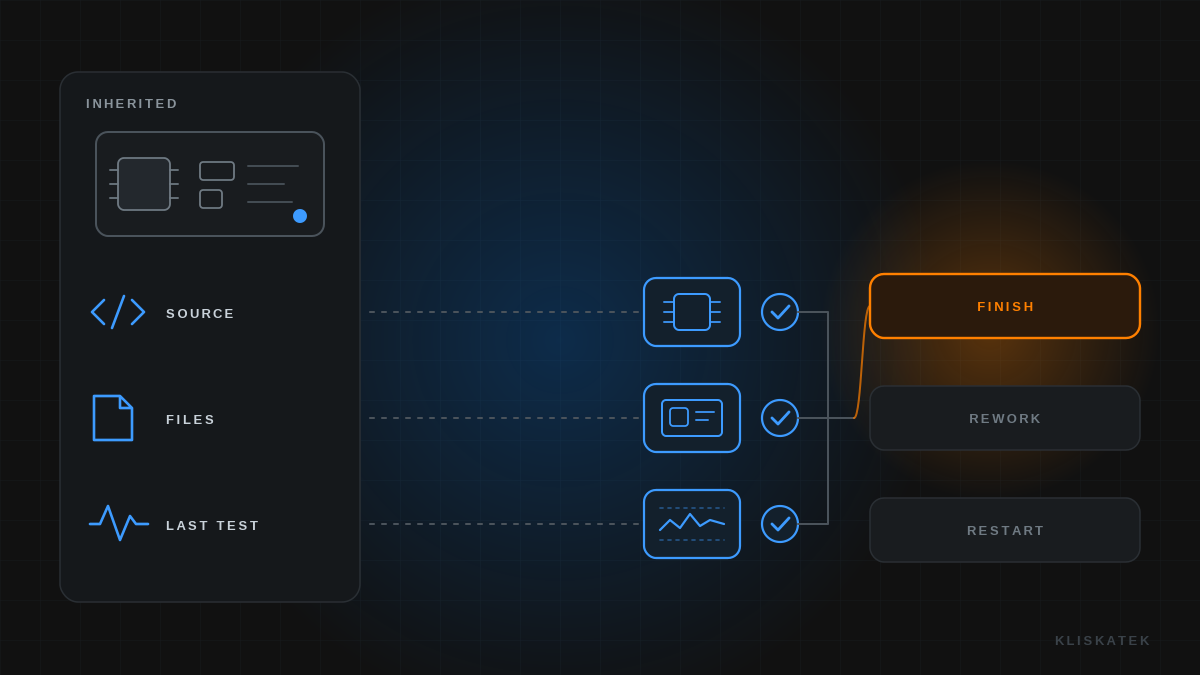
What the prototype on the desk does not tell you
The unit in front of you is evidence about itself. It says nothing about the firmware you were sent, the files you were sent, or the test you were told it passed.
Those can drift apart quietly. The firmware in the unit may be a build that nobody committed. The board may be revision C while the files are revision D, or the other way round. The test that "passed" may have been a person with a laptop and a good afternoon.
None of this needs bad faith. It is what happens to any development that stops halfway. The last weeks are the least documented ones, because everybody expected to be there for the next weeks too.
The test for an inherited development: three rebuilds
Before promising anybody a date, try to make the thing again from what you received. Three rebuilds, and each one fails in its own useful way.
- Build the firmware from the source. On a clean machine, with the toolchain the project names. Then load it and check that the unit behaves the same. If the binary in the unit and the binary you built are not the same thing, you are not maintaining the product yet. You are maintaining a guess. The reproducible builds community has written a lot about why this is harder than it sounds.
- Make one more unit from the files. Schematic, layout, bill of materials, assembly notes. Order the parts and see which ones you can still buy. A board that cannot be reordered is not a product, however well it works.
- Repeat the last test. With the fixture, the instruments, the script and the limits the first team used. If nobody can say which ones those were, there was no test. There was a demonstration.
An inherited development that passes all three is one you can finish. Everything else on this page is about what to do when it does not.
Where an inherited development usually breaks
The failures are mundane, which is why they survive so long.
- The toolchain lived on one laptop. A compiler version, an SDK that is no longer downloadable, a licence tied to a machine that has been wiped.
- The files are one revision away from the board. Usually somebody soldered the fix that made the prototype work by hand, and it never made it back into the layout.
- Parts went obsolete while the project was paused. The replacement is functionally identical, and it still changes what your test report covers.
- The test was in somebody's head. Which reader, which distance, which temperature, which number counted as a pass.
- The programming jig never left the first team's bench.
Each of these costs days, not months, if you find it in the first week. Found in month three, each one is a surprise with a meeting attached.
Three questions about an inherited development that are not technical
Three more things decide it, and none of them is engineering.
Who owns the source, and can you change it? Having a copy of the code is not the same as having the right to modify it and sell what you build. Third party stacks inside the firmware come with their own licences, and those travel with the product.
Can you reach the first team for an hour? Not to redo their work. To answer the five questions that the rebuild turns up. One hour with the person who wrote the firmware is worth a week of reading it.
What has somebody already signed? If the product has a declaration of conformity, it covers a specific configuration. Whoever puts the product on the market signs for it, and an inherited development may have changed since.
Finish, rework or restart
The three rebuilds turn a vague question about an inherited development into a short list of answers.
- Finish when all three pass. The hardware, the firmware and the test agree, and the work left is the work on the plan.
- Rework when one of them fails in a bounded way. A toolchain to rebuild, a board revision to reconcile, a test to write down. Size it, then finish.
- Restart when nothing rebuilds. That is not a failure. The expensive part of the first attempt was learning what the product has to do and what does not work. That survives as a specification, and it is often worth more than the hardware.
The mistake is choosing before trying. Teams under pressure tend to promise to finish, because finishing sounds cheaper. Sometimes it is. The three rebuilds tell you which case you are in, for the price of a week or two.
When the developer has gone and the machine still runs
There is a version of this that keeps reaching us. A machine that works well, years into its life, whose manufacturer no longer supports the control software. It has moved on, or offers a new machine instead.
The same test applies. Can you rebuild the control program from what you have, and run it against the machine? If you can, you can maintain it. If you cannot, the question changes. It is no longer how to patch the old software. It is who takes over the control of the machine as a whole, from the controller to the reports. The aim is that it keeps doing the job it already does well.
Where to start
If you have an inherited development, or a system somebody else built and nobody looks after, do the three rebuilds before you commit to a date. Firmware from source, one more unit from the files, the last test repeated.
If you want help with that, it is exactly the shape of a paid scoping study. A fixed fee, a short time, and a clear answer: finish, rework or restart. It is the same seam we described in the hidden cost of splitting a project between suppliers, with time doing the splitting. You can also read how we work across hardware, firmware, software and radio.
Next week: why your reader can show a new tag every second when it is the same tag.